I have spent over 8 months with the ROG Ally now, and it has been a nifty little PC on the go. It was at its worst with the full Windows desktop and became a bit more palatable with the Xbox Full Screen Experience (FSE) but it never managed to reach a console-level experience, with far too niggles in daily use. However, that seemingly was the price to pay for compatibility.
A couple of months after I purchased the device, I switched to using a full-size M.2 2280 2TB SSD (before the s**t hit the fan) with an adapter and while doing so switched to using G-Helper along with Playnite instead of Armoury Crate, which worked really well for me. It seemed I was getting the most out of the device.
While I had setup SteamOS as well as Bazzite for a little bit when setting up the new SSD, it was not worth switching to Linux for what seemed to be minor gains. However, as Microsoft has transitioned more towards “Microslop”, it became far too egregious to continue using it and hence I finally chose to dual boot Linux with Windows as a 50/50 disk split and then decide which way to commit.
For Linux, I chose CachyOS-Handheld simply because I occasionally use my Ally with a dock and a monitor and wanted a completely usable desktop mode as opposed to being restricted by an immutable OS. Then came decision time, for which I chose to install some titles from my Steam library with built-in benchmarks that worked well on both platforms.
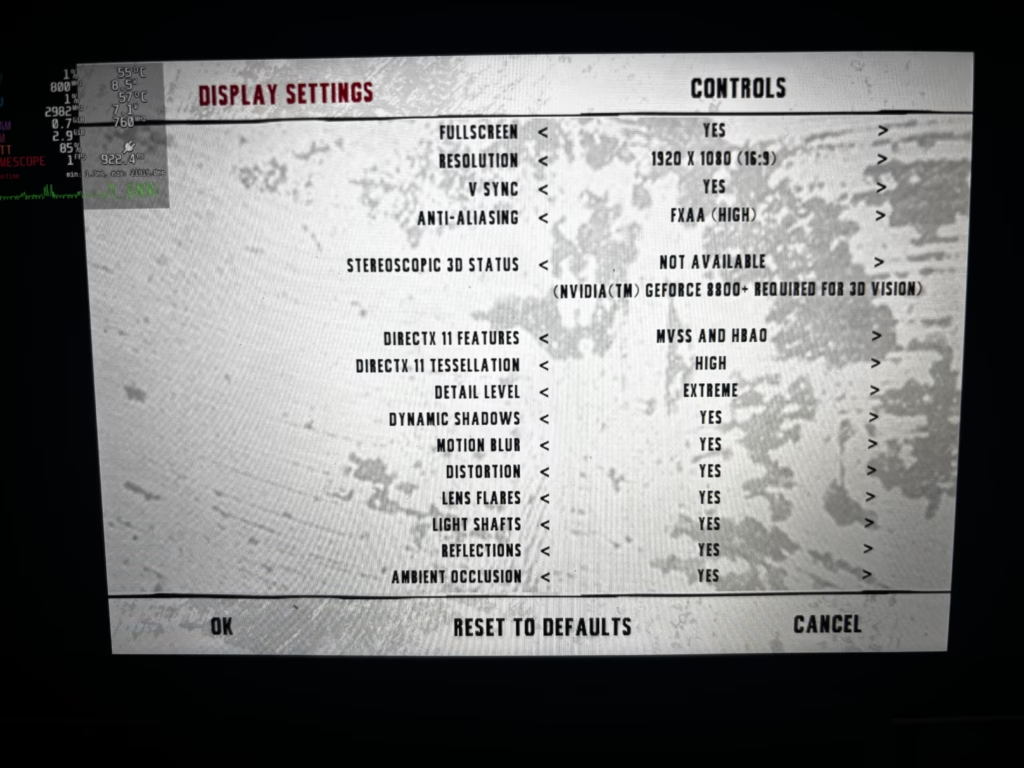
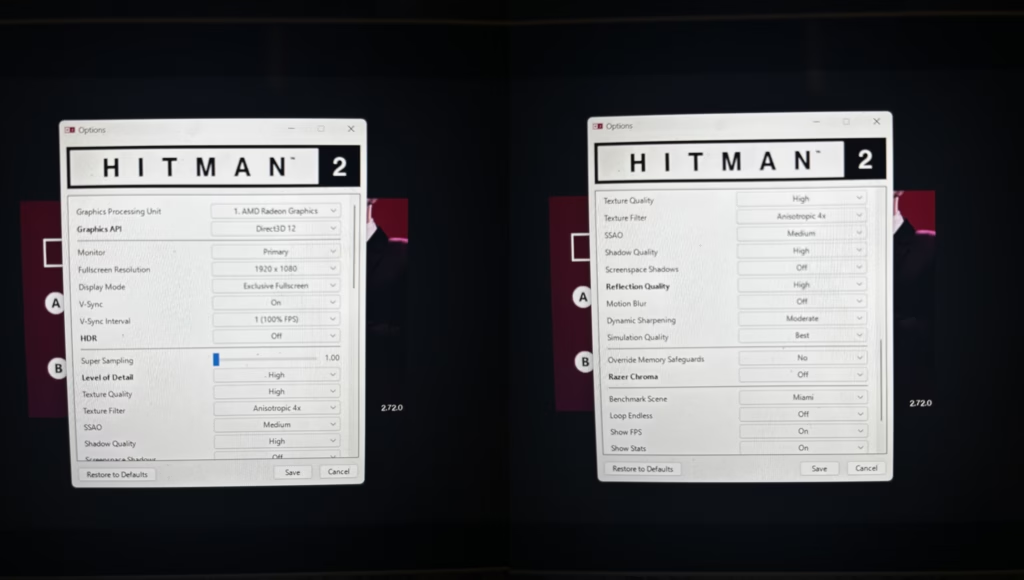
Thus my Windows and Linux setup at the time of benchmarking was as below. I executed most of the benchmarks at 1080p High settings or equivalent in 30W Turbo mode.
Windows: Windows 11 IoT Enterprise LTSC, G-Helper, AnyFSE with Playnite
Linux: CachyOS-Handheld Rolling, SteamOS Beta (3.7.20)
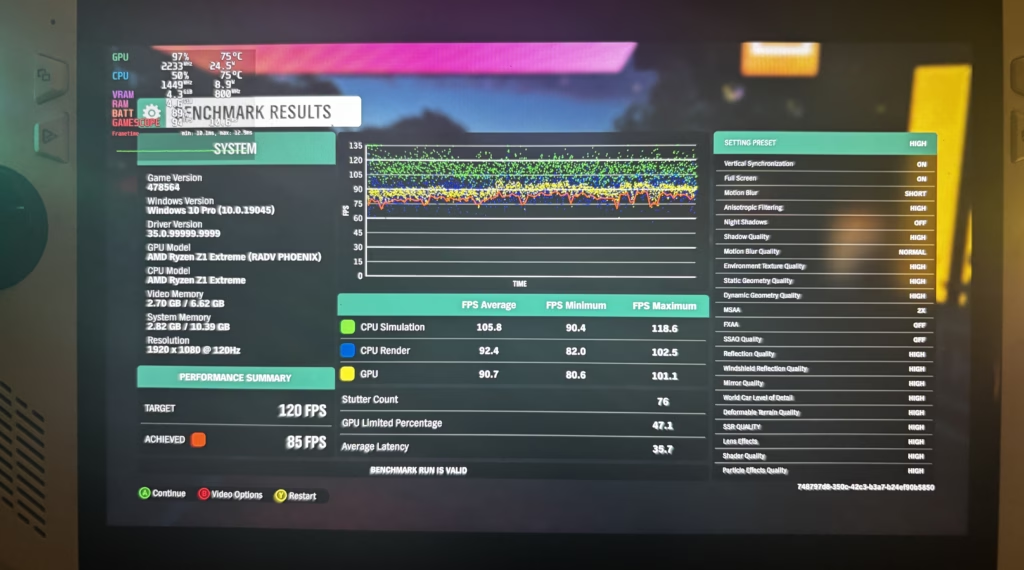
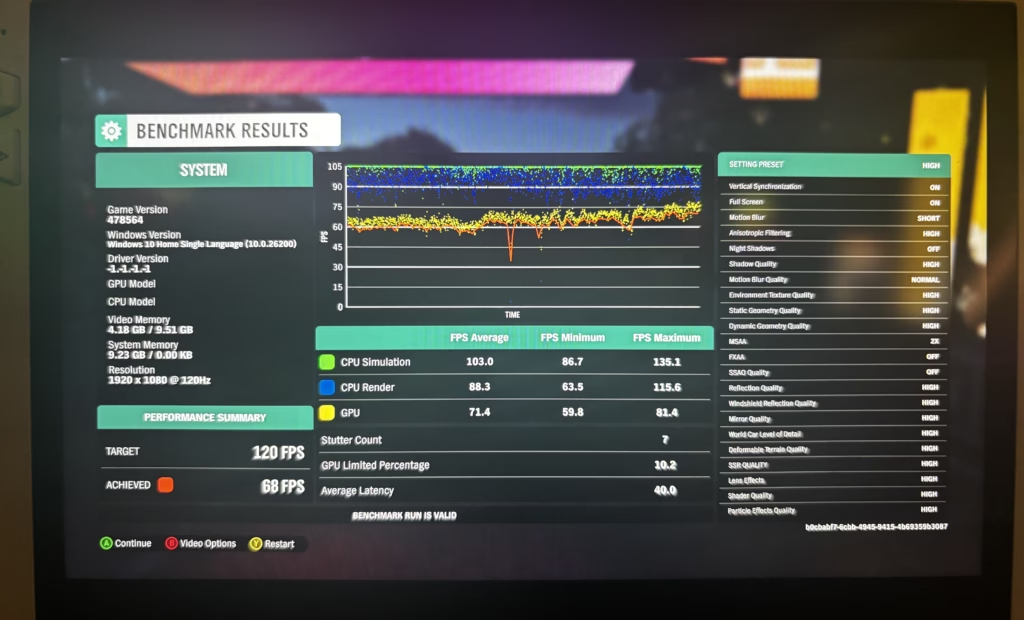
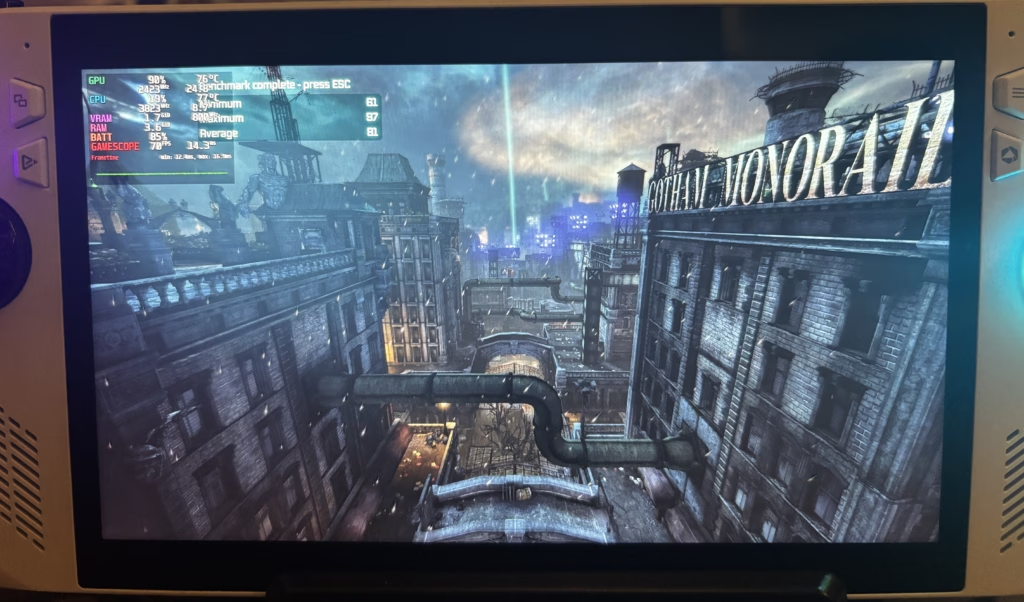
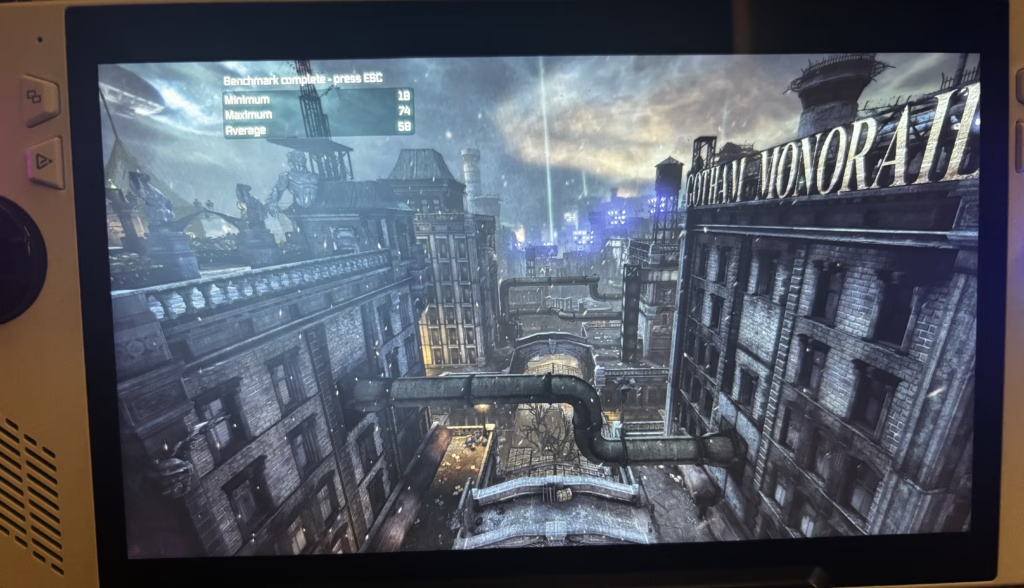
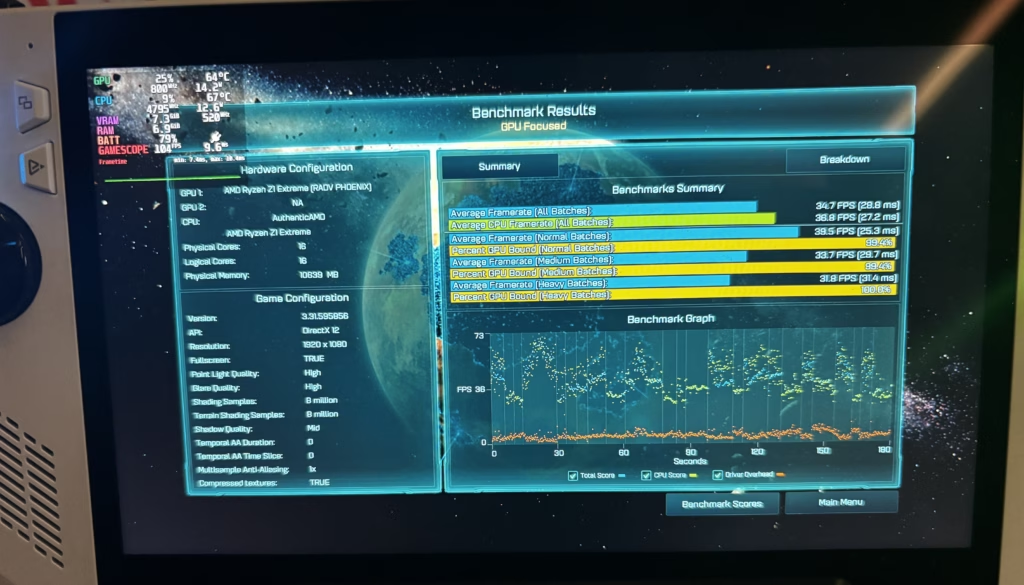
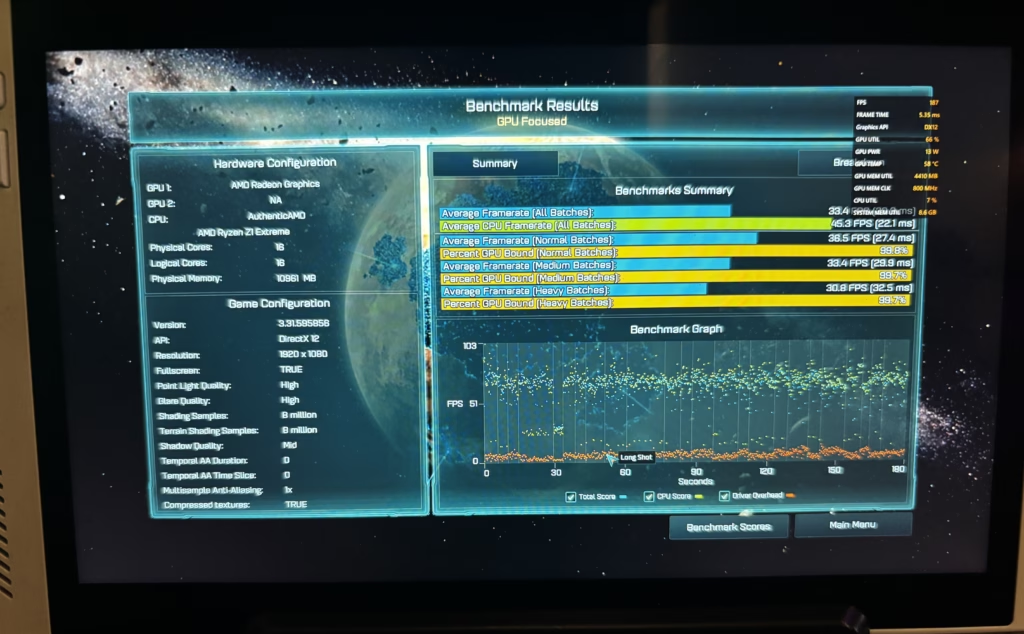
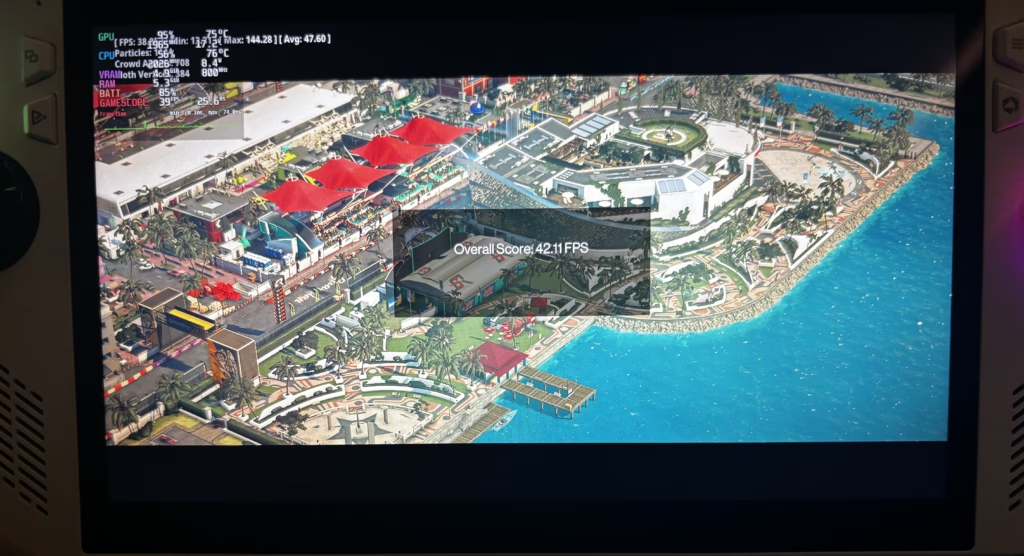
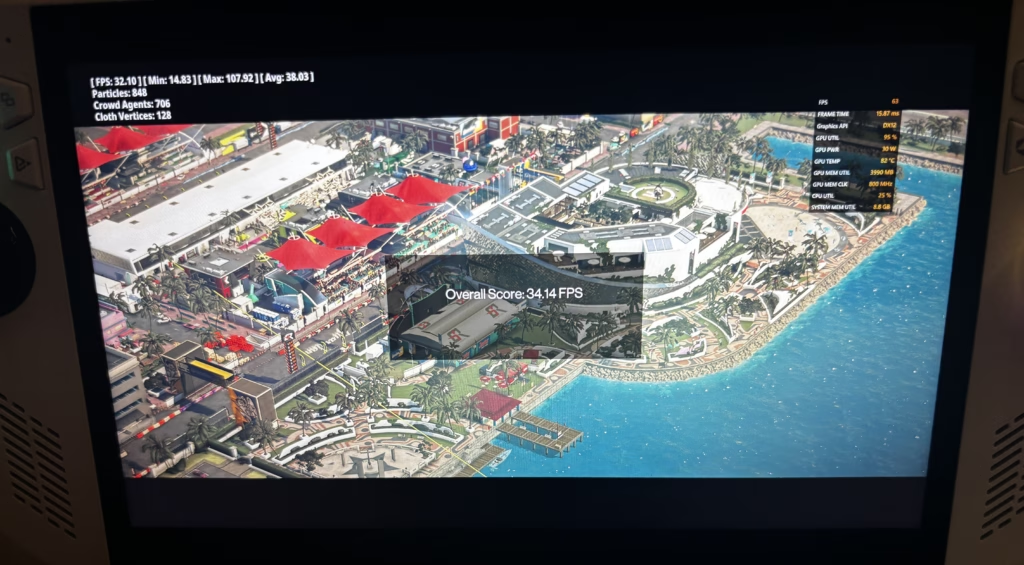
While I was expecting the Linux performance to be a tad better, the result as highlighted below was more than surprising to the point that I disabled G-Helper and Playnite to switch to Armoury Crate again thinking I messed something up, only to get the same results even with another Graphics driver update on the 24th of March.

The observations I can draw from the results and experience are:
- For a handheld, the APU power management on Windows is abysmal compared to Linux which is resulting in the GPU underperformance
- The custom drivers that AMD provides for the Z1 series is really poor (with rumours of it being stopped completely). Besides the performance difference, it was evident by the fact that while the 4K HDMI output from my dock to a portable monitor worked fine on Linux, it didn’t on Windows.
- For CPU-intensive games like Ashes of Singularity, the performance is nearly identical which harks back to point 1.
- It is ironic that Linux over Proton correctly detected the OS and driver details while Windows failed to do so as visible in the Forza images.
- For compatible games, it makes no sense to use Windows over Linux on an AMD handheld.
With that, I am another Linux convert, at least on the handheld without Nvidia shenanigans as I mainly use it for indie titles and emulation. I will leave you with images of the benchmark, least it seems like I made the numbers up. Until next time.